
Working sheet
How to write a clear profile of the animal
The profile is a page you fill in on a quiet day. When you need it, you no longer choose adjectives. You read the fields. It is not a form sent to us and it does not open a search.
Published · Updated
- The name used at home
-
Write the name you actually use. Add whether the animal comes back when called. Many dogs do, on a known route. Many cats do not come when you call, especially if they are frightened. If you write “comes when called” when it is not true, a neighbor will insist in a tone that drives the animal away.
- Species, sex, age
-
Species is the first word: dog or cat. Sex helps when someone describes a found animal. Age, if you do not know it exactly, stays “approximate,” with the year they came into the house. Do not round a four-month-old youngster up to “one year” to make it sound simpler.
- Size
-
Compare with a stable object, or measure the height at the withers on an ordinary day. “Medium” means something different to each person. “About an adult's knee” or “fits in a 50 cm carrier” is easier to use. Weight, if you have it from the clinic, is written with the date of the weighing, because it changes.
- Stable markings
-
Note the colors, the patches, the shape of the ears, the tail, and the marks that do not wash off: a scar, a missing tooth, two eyes of different colors, an ear carried a certain way. Do not enter last week's haircut as if it were permanent. After a clip or a visible change in weight, rewrite the line.

A white stripe on the face shows well from the front. It is a mark you can describe in two words. 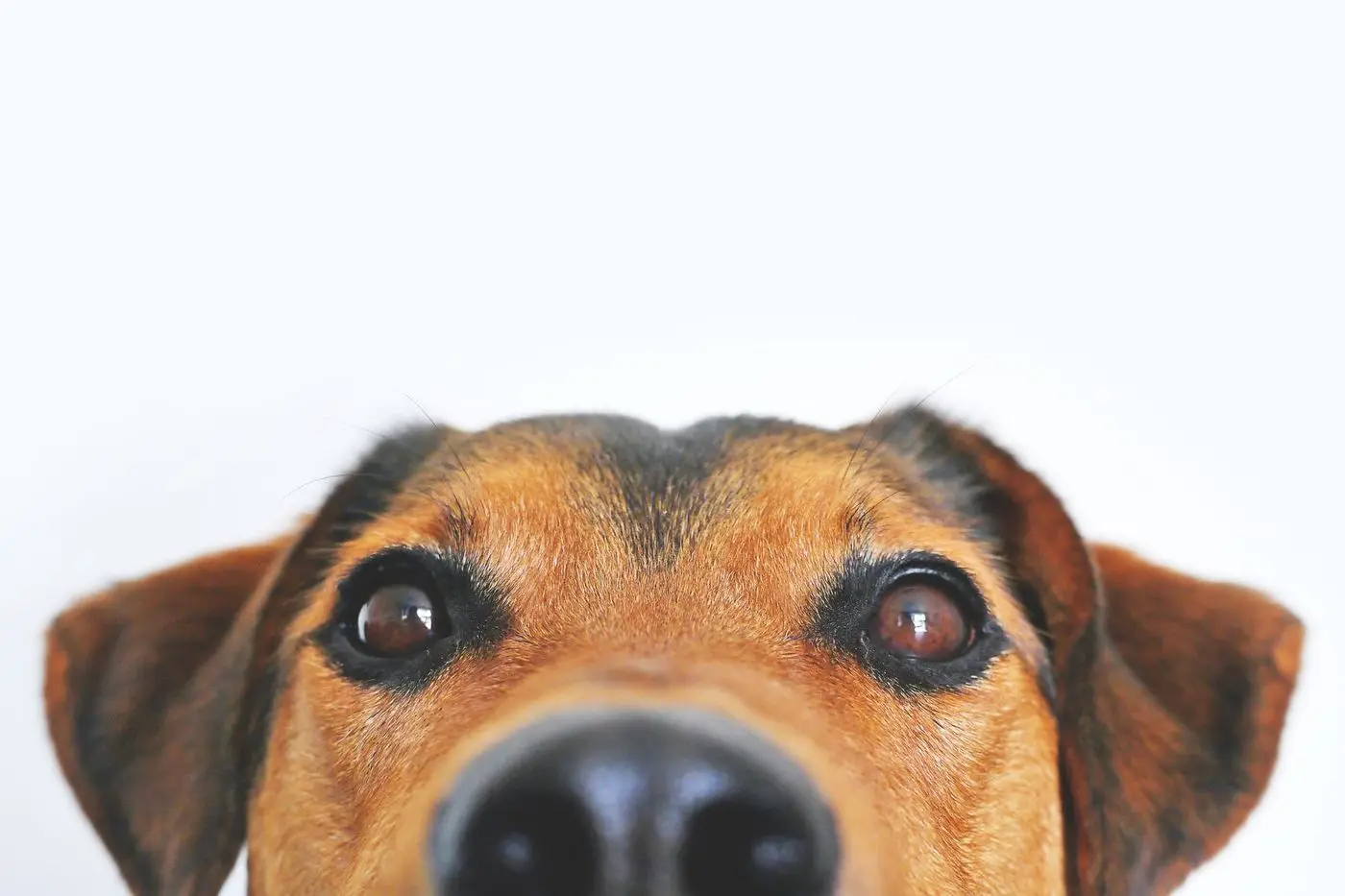
The close-up helps with the eyes and the muzzle. It does not replace a photograph of the whole body. - What they are wearing today
-
The collar, the color of the harness, and the text on the tag are useful, but they can be lost. On the sheet, separate “stable marks” from “what they are wearing today.” A scarf, a bow, or a coat does not identify the animal a week later.
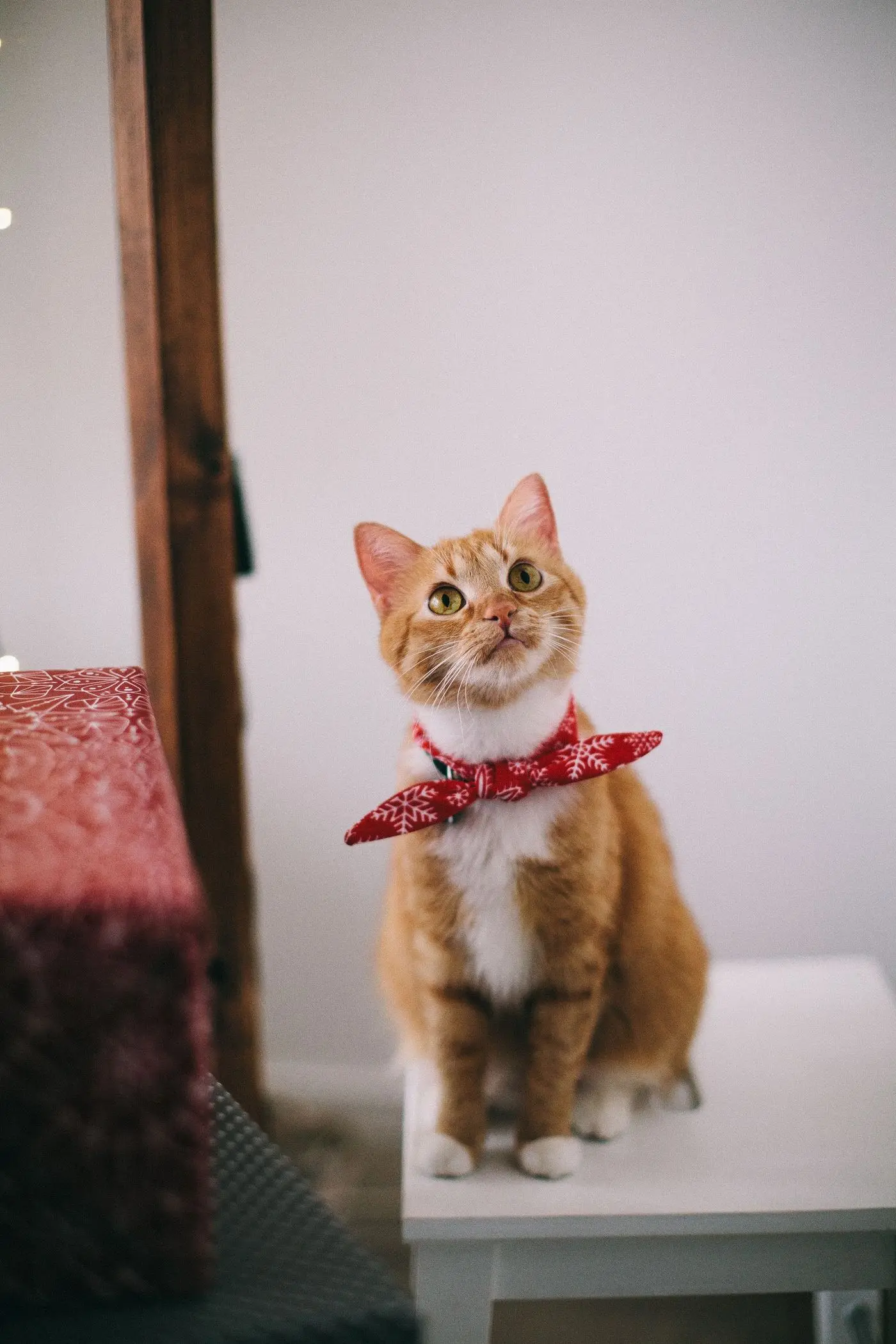
The scarf is an accessory of the moment. In the profile it is mentioned separately from the color of the coat. - Photographs
-
Take them in daylight, when the animal is awake and standing against a plain background. You need three frames: the whole body from the side, the face, and the mark you want someone else to recognize. Avoid a filter that changes the color. If the animal is wet or freshly clipped, the photograph is no longer a reference until you take another.
Keep copies on the phone and one printed. The phone runs out of battery exactly when you need the picture.
- When they are afraid
-
Write what you have already seen, not what you think the breed “should” do. They hide, run toward the street, press against people, will not be lifted, bark, or stay silent. This line tells a neighbor not to run after them. For the day-to-day context, the note on signs of stress explains why a single gesture is not a conclusion.
The text you can copy
Fill in the blanks. Do not send the sheet to the site. Keep it in the drawer and on the phone. The microchip numbers in the example below are only empty places, not a real chip.
Name:
Species:
Sex:
Approximate age:
Size (height or comparison):
Colors and patches:
Stable marks:
Collar / harness today:
Text on the tag:
Microchip number (if there is one):
Registry where the phone is listed:
Reaction when afraid:
Last photograph taken on:
Phone that is answered:
Second phone:
How to check the collar, and why a microchip does not replace the tag, is on the identification page. How you use the sheet in the first hours is in first hours.
A filled-in example, invented as a model
The lines below do not describe a real animal and they are not a notice. They show how short a text a neighbor can remember can be. Replace every detail with what you see on your animal.
“Cat, female, small, gray with white on the chest and a black patch on the left ear. Wears a pink collar that releases. Hides under cars and will not be picked up. Last seen on stair B, around 6:40 p.m. Phone: the number you answer.”
Left out of the example, on purpose, is any promise of a large reward and any word about “pure breed.” A patch and an ear can be seen. A breed is guessed and confused. If the animal has a chip, the number stays in the drawer, not necessarily in the text you post on the stairs: the stairs get the phone number.